FAR-RIGHT PARTY FALLS JUST THREE SEATS SHORT OF POWER
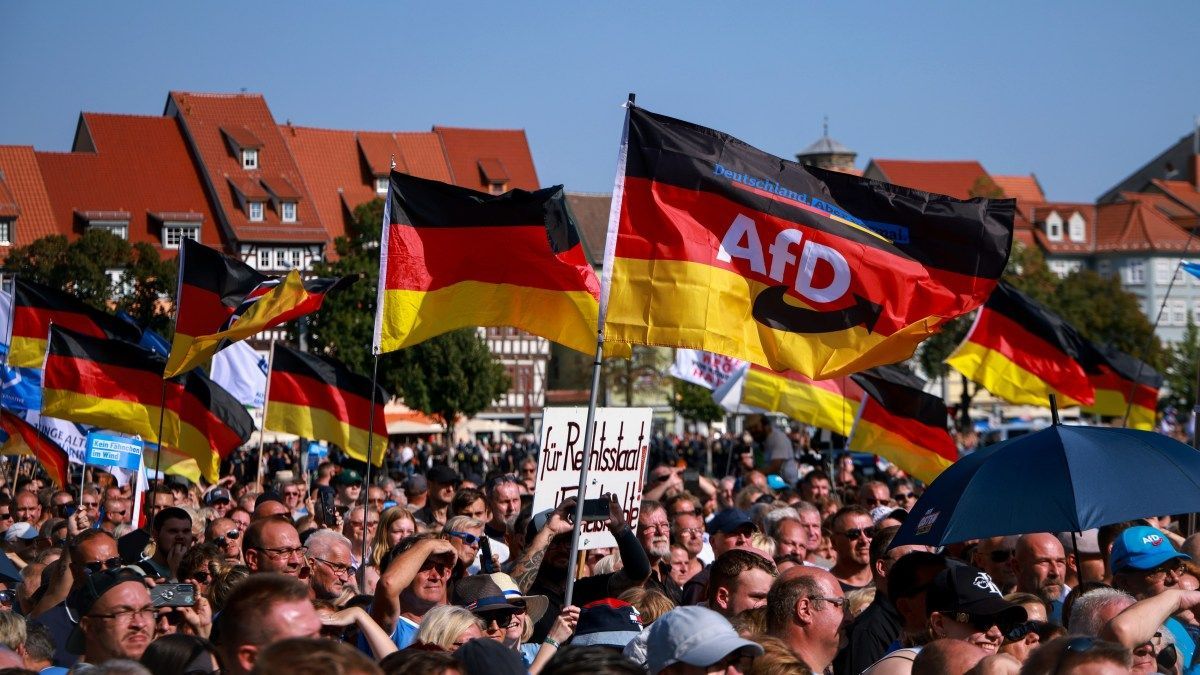
Far-right party falls just three seats short of power as allies cheer and rivals sound the alarm.
Germany’s political establishment was left reeling after the AfD stormed to 43.8 percent of the vote and seized 39 of 83 seats — its strongest-ever state election result. The party landed just three seats short of an outright majority, pushing it closer to governing a German state than any far-right party since World War II.
Across Europe, the hard right celebrated. Italy’s Deputy Prime Minister Matteo Salvini hailed his “friend” Alice Weidel and declared: “Another Europe is possible.” Austrian far-right leader Herbert Kickl claimed voters had torn down the political “firewall” around the AfD, while Spain’s Vox leader Santiago Abascal called the result “a great hope for Germany and Europe.”
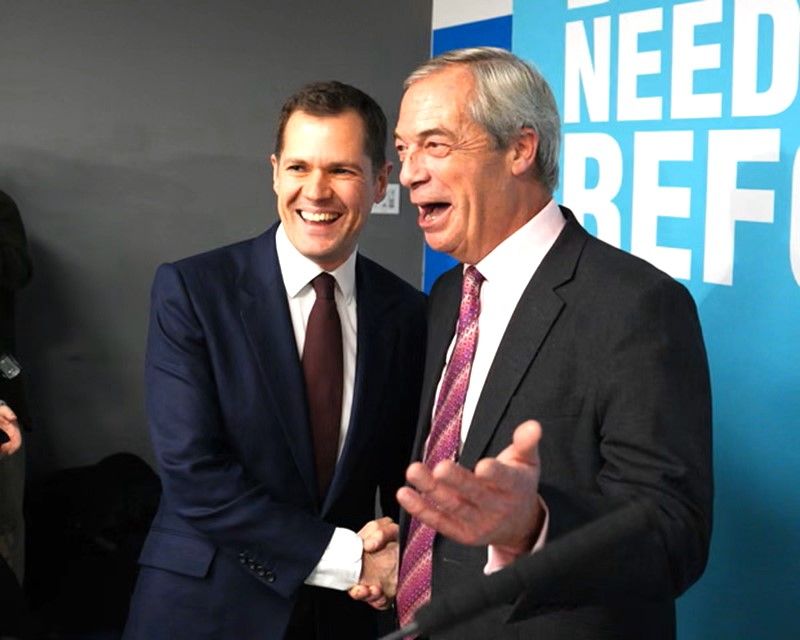
In Britain, hard-right Restore Britain leader Rupert Lowe branded the AfD “an inspiration,” while Dutch far-right figure Geert Wilders also offered congratulations as the results rolled in.
But not everyone was rushing to join the applause. Nigel Farage had not publicly commented by Monday morning, and France’s Marine Le Pen and Jordan Bardella also remained silent.
France’s Europe and Foreign Affairs minister launched one of the fiercest attacks, denouncing the AfD as a “neo-Nazi, anti-European, pro-Putin” force and urging opponents of extremism to respond to voters’ anger.
Spanish Prime Minister Pedro Sánchez said the result was “a warning” that the ultra-right threat is gaining ground across Europe and beyond, arguing that Spain’s progressive coalition was now “more necessary than ever.”
Polish Prime Minister Donald Tusk went further, writing that “only idiots or traitors” in Poland could celebrate the result. French Europe Minister Benjamin Haddad called it “a grave moment in Europe,” warning that nationalism and xenophobia would not solve voters’ problems.
On the left, Jean-Luc Mélenchon blamed Europe’s centrists, calling the AfD’s rise a “catastrophic demonstration” of their political blindness and declaring: “This disaster is their doing.”
Even Giorgia Meloni’s coalition appeared split. Foreign Minister Antonio Tajani, leader of the pro-European conservative Forza Italia, called the result “extremely bad news,” putting him at odds with Salvini’s jubilant response.
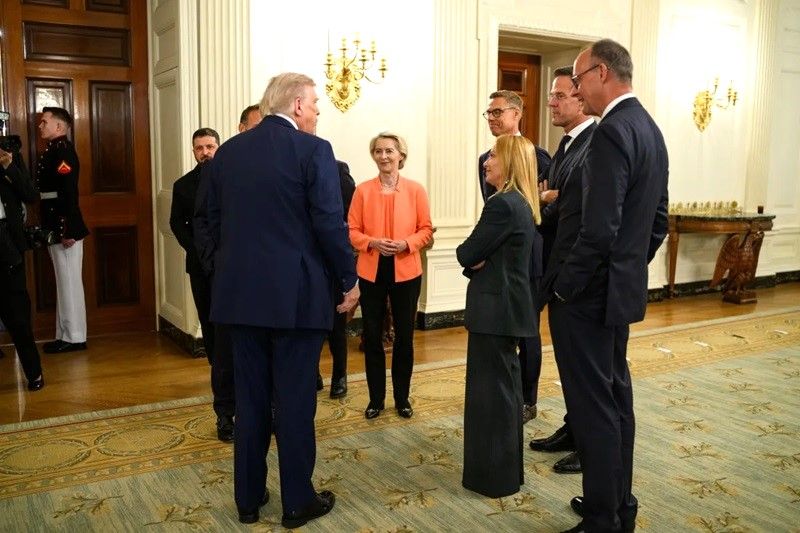
Meanwhile, Meloni and French President Emmanuel Macron had not publicly weighed in — and neither had EU chiefs Ursula von der Leyen and António Costa.
Significant in all this Europe melodrama was also seen in one funeral in Serbia.
Leading European Union figures criticised Serbia on Tuesday after the country gave military honours to Ratko Mladić, the Bosnian Serb general who died while serving a life sentence for war crimes, renewing questions about Belgrade’s bid to join the bloc.
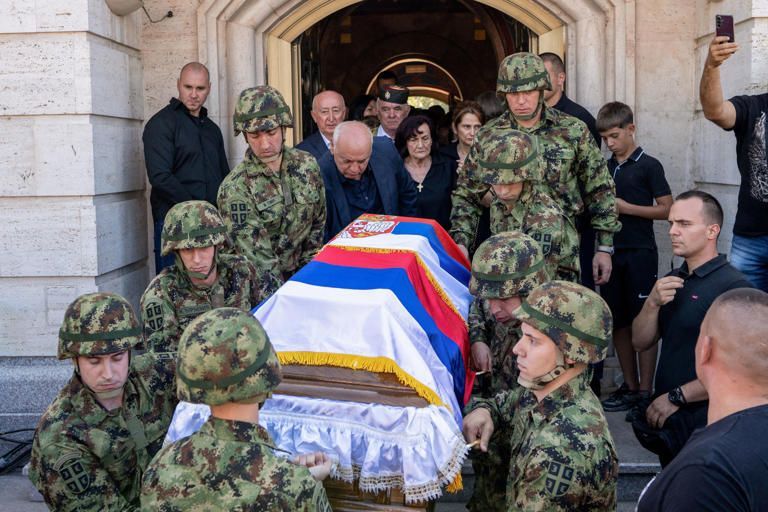
Mladić was laid to rest in Belgrade on Monday accompanied by military honours. Patriarch Porfirije, the leader of the Serbian Orthodox Church, officiated over the funeral service, with Serbian army personnel carrying Mladić’s flag-draped coffin through the cemetery.
Several Serbian government ministers attended the proceedings for the man dubbed the "Butcher of Bosnia", who was convicted of orchestrating the continent’s first genocide since the Second World War. Mladić remains widely regarded as a hero among many Serbs.
"The images from Ratko Mladić’s funeral yesterday in Belgrade were shocking," European Commission President Ursula von der Leyen and European Council President Antonio Costa said in social media posts.
"The elements of official support and the presence of some senior Serbian officials at the funeral are deeply regrettable," von der Leyen and Costa said. "They demonstrate a failure to confront a dark chapter in Europe’s recent history and contradict the values underpinning Serbia’s path towards the European Union."
While populist President Aleksandar Vučić chose not to attend the service, his son Danilo was present. Bosnian Serb nationalist leader Milorad Dodik and Alexander Botsan-Kharchenko, the Russian ambassador in Serbia, were also among those in attendance.
Vučić, formerly an extreme nationalist who backed Serbia’s expansionist agenda during the conflict that shattered Yugoslavia in the 1990s, characterised the service as an "emotional outpouring".
Serbia’s Justice Minister Nenad Vujić joined Mladić’s family at the burial. He stated that authorities assisted in maintaining order, so the event proceeded in a "dignified" manner, whilst noting that the family remained in charge.
Vučič is seeking to balance pressure from core supporters — many of whom revere Mladić — with Serbia’s stated ambition to join the European Union, as potential snap parliamentary elections approach in the coming months.
Last week, EU Enlargement Commissioner Marta Kos cautioned that the funeral would serve as "a test" for Belgrade. She subsequently cancelled an intended visit to Serbia, maintaining that "the glorification" surrounding Mladić’s death was fundamentally incompatible with European values.
The episode also puts renewed attention on Vučić’s relationship with the European People’s Party, the centre-right political family to which von der Leyen belongs.
For years, the EPP offered firm backing to Hungarian Prime Minister Viktor Orbán’s hardline nationalist Fidesz party to keep him within Europe’s mainstream fold. However, the EPP ultimately suspended Fidesz in 2019 following concerns over democracy and the rule of law in Hungary, leading Fidesz to withdraw from the group in 2021.