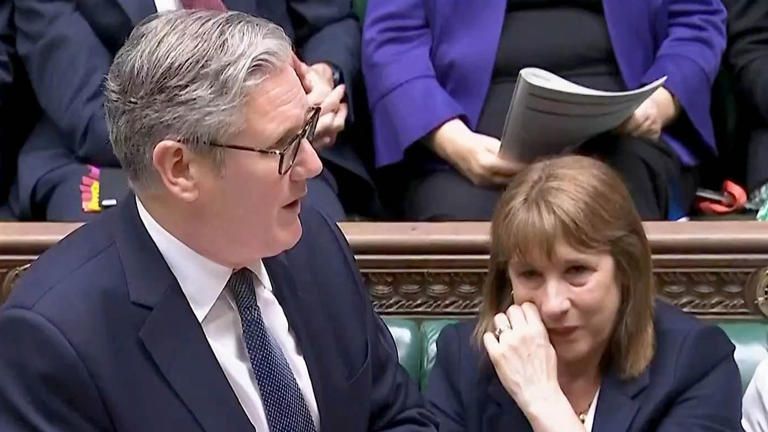
DONALD TRUMP as ITALIAN CAPTAIN ALBERTO BERTORELLI in ALO, ALO, ALO
Well, stupidness of Donald Tramp does not finish with Venezuela. Birds on trees are chirping that US has a lot of gas, but not the oil. Trump did go after Venezuela simply because of the crude oil.
Simply the same he has trying to do with Iran, however Trump did not expect resistance of Iran. Now the damage being made, the question here is who would the multi-year closure of the Quorum cost the most?
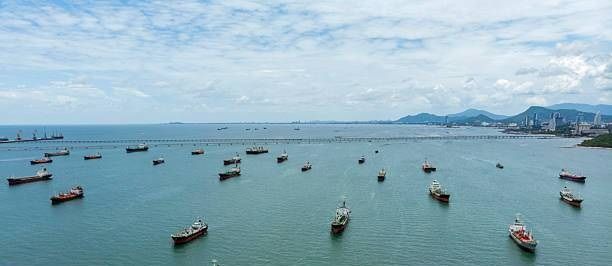
Well, the Strait of Hormuz is not just a geographical point between Iran and Oman. It is the energy artery of the world. If it were closed for months or even years, the consequences would exceed the prices at the gas stations. We are talking about hundreds of billions of pounds sterling a year, shifts in geopolitical centres of gravity and a potential change in the global monetary balance.
About 20 million barrels of oil, or about a fifth of the world's oil consumption, flow through the Strait of Hormuz every day. This includes exports from Saudi Arabia, Iraq, Kuwait, UAE, and Iran.
While some of the oil can be diverted via onshore pipelines (Saudi East-West pipeline, UAE ADCOP), the EIA estimates that the real bypass capacity is limited to about 2-3 million barrels per day. This means that in the event of closure, most exports from the Persian Gulf would remain blocked. Hormuz is not only important for oil. About a fifth of the world's trade in liquefied natural gas (LNG) – mainly from Qatar – also travels through this strait. The closure therefore means not only more expensive oil, but also pressure on the global gas market.
I prepared two (2) scenarios:
Let’s take starting oil price for Brent Crude $75 per which was available before the closure.
Scenario A: $120 per barrel (+$45)
Scenario B: $180 per barrel (+$105)
These are the price levels that financial analysts are referring to in case if the Middle East escalates.
Europe is a major importer of crude oil. According to data for 2024, it imports about 9.3 million barrels per day. If the prices will go to $ 120 per barrel the additional costs would be $153 bn. However, if the price reach $180, the additional costs would be $356bn. Taking into account the broader LNG shock (rising LNG prices, higher ship insurance premiums, logistical disruptions), the total annual cost to the EU comes close to nearly $200bn in the scenario price £120 or it would be $400bn or more in the scenario price of $180 per barrel or more.
For an economy of about $22.5 trillion, this represents a blow of the order of 0.8-1.5% of GDP per year. It's not just a number on paper. This is lost competitiveness for industry, more expensive food, more expensive logistics and pressure on public finances.
Lets take into the game important players:
China is the world's largest importer of crude oil. In 2024, it imported about 11.1 million barrels per day while the data in 2025 are even higher 12.9 million barrels per day. This would mean additional annual cost for China at $120 about $182bn, or at $180 about $425bn. As the Chinese economy is a major exporter of industrial products, more expensive energy has a direct impact on production costs and competitiveness. An additional vulnerability is related to Iran. Iran exports about 1.6 million barrels a day, mostly to China. Analyses show that China imports about 1.4-1.5 million barrels per day from Iran, often at a discounted price. If, as a result of conflict or secondary sanctions, these flows were to become more expensive or disrupted, China would lose an affordable source of energy and be forced to buy on the open market. Just losing a $10-30 discount on these volumes means an additional $5-15bn in annual cost. China's GDP in 2025 is around $20 trillion. This means that the combination of the price shock and the loss of discounted barrels could translate into up to 2% GDP hit per year.
It is not secret that the US has become a net exporter of oil and derivatives in recent years. In 2024, they had about 2.27 million barrels of daily net exports. This means that higher global prices may even improve the US trade balance. On other hand the US still consumes about 19 million barrels per day. If the price rises by $45 per barrel, this translates to a gross pressure of about $312bn annually on the domestic US economy (through fuel, transport and inflation prices). With a $105 price hike, that pressure approaches $728bn.
Part of these spills over into US energy profits and tax revenues, but the political impact remains, higher fuel prices are always macroeconomically and politically sensitive in the US. The US GDP in 2025 was about $30.6 trillion. The US is therefore strategically less vulnerable than Europe or China, but it is not immune.
If the Strait of Hormuz were to remain closed for several years, the effect would be cumulative:
Europe could pay an additional USD 1-1.2 trillion for energy over three years. China similarly or more.
The US would have internal inflationary pressure, but a relatively tiny better geostrategic position.
Generally this would cause stagflation (simultaneous inflation and slowdown in growth), pressure on interest rates, increased government borrowing, redistribution of trade flows, accelerated energy diversification.
But an energy shock is never just a fuel bill. When energy remains high for several years, it begins to affect the competitiveness of industry, interest rates, public debt and currency stability. Therefore, the question here is whether higher prices goes beyond pure mathematics and raises a broader question: “Could the several year closures of the Strait of Hormuz accelerate the shift in global monetary balance?
Make no mistake, energy is the foundation of the modern economy. When its price moves permanently, so does the power ratio. Energy shocks rarely remain limited to energy. Oil and gas are the basic inputs of the modern economy. When the price of energy moves permanently upwards, the monetary system also begins to move.
The question, therefore, is not only how much it costs to close the Strait of Hormuz, but whether a multi-year shock could upset the existing currency balance – especially the role of the US dollar as there will be inflationary pressure. Closure will bring high inflation, persistent budget deficits, monetary financing of debt and here we will start the question of the dollar's long-term purchasing power. The US consumes about 19 million barrels per day. With a $100 per barrel price rise, that translates to hundreds of billions of dollars in annual inflationary pressure. This will weaken the real value of the dollar in the long run. But not just US dollar. Europe including the United Kingdom are significantly more vulnerable in terms of energy than the US. A several year energy shock would mean a deterioration in the trade balance, higher industrial costs, pressure on public finances, divergences between euro area countries. Euro and Pound Sterling will gain against the dollar in the short term if US inflation is more severe but weaken in the long term due to the structural energy vulnerability of the EU and the United Kingdom. The key risk for the euro currency will not be just inflation, but fragmentation > interest rate differentials between members and political pressures.
What is not to be expected would be, that the monetary system probably wouldn't fall apart overnight. But years of energy stress would accelerate the shift to a more fragmented, bloc-divided world. The dollar would remain crucial, but no longer untouchable. The euro would be under pressure same Pound Sterling while for China would look for alternative settlement routes, mainly with Russia.
The final question here is not whether the world would have survived the closure of Hormuz. The world would survive it. The question is who would come out of it stronger – and who would be permanently weaker. My money would be on China and Russia, while US will have huge problems.